Why “Adagio for Strings” Belongs on the Marching Field
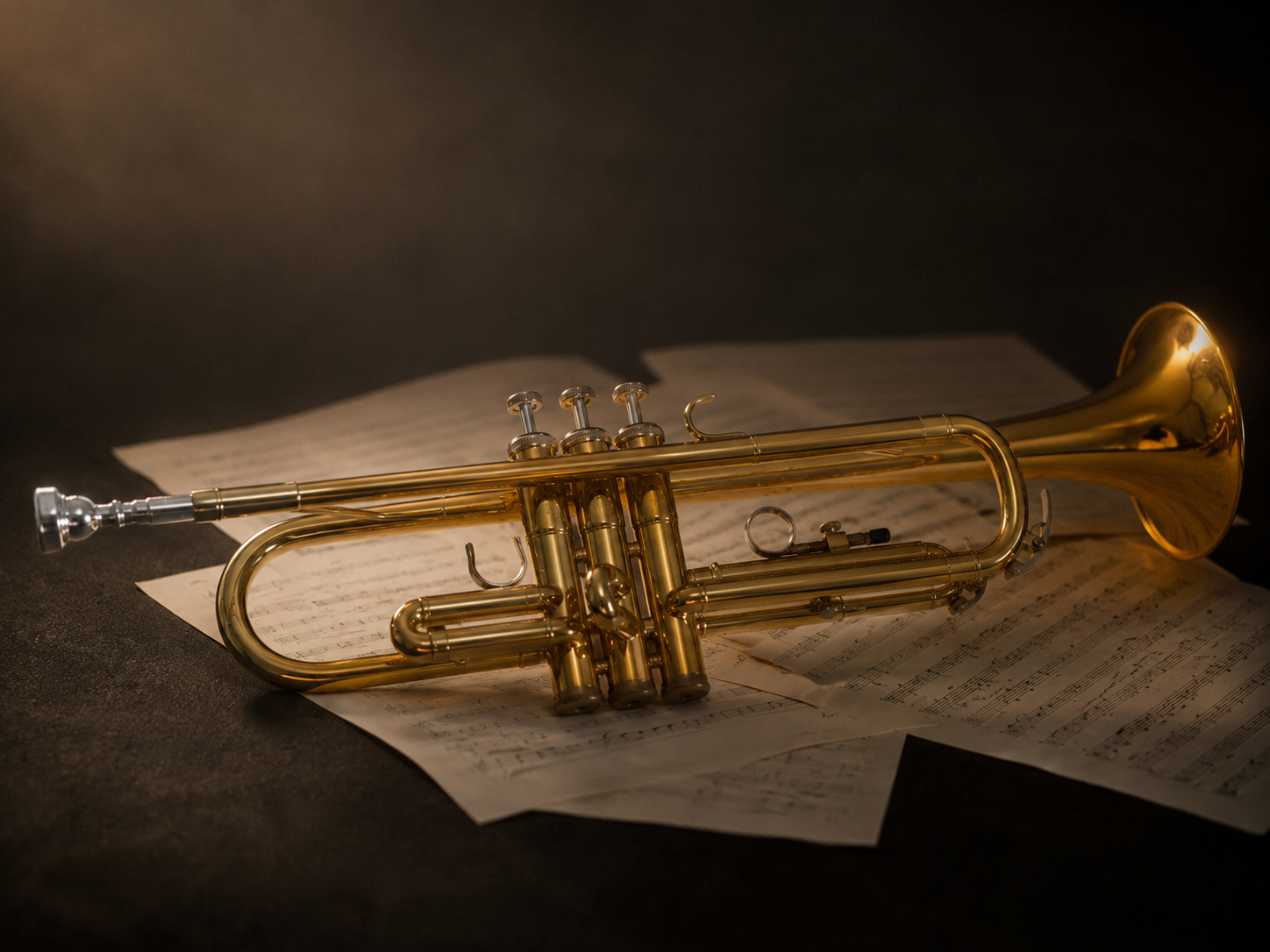
Every so often, a piece of music shows up on the marching field and feels like it was always meant to be there.
That does not mean it was written for marching band or drum corps. It does not even mean it is an obvious choice. Sometimes the pieces that work best on the field are the ones that seem, at first, too intimate for it.
Samuel Barber’s “Adagio for Strings” is one of those pieces.
This summer, Troopers are using “Adagio for Strings” as part of their 2026 production, Into Darkness. For longtime drum corps and marching arts fans, that choice feels less like a surprise and more like another chapter in a long conversation. “Adagio” has appeared across the marching arts before, including performances by the Mandarins (1993), Santa Clara Vanguard (2000, as Barber’s choral adaptation “Agnus Dei”), The Cadets (2013), Vanguard Cadets (2013), Pioneer (2016), Columbians (2017), Bushwackers (2019), Fusion Core (2019), and others.
There is a reason this piece keeps finding its way back to the field.
It gives an ensemble something harder to do than impress people.
It asks them to move people.
“Adagio for Strings” is not flashy in the usual marching band sense. It does not begin with a burst of velocity or a wall of impact. It does not walk in announce itself and demand attention.
Instead, it waits. It breathes.
It builds slowly, almost painfully, asking the performers and the audience to stay inside the phrase long enough for the emotion to gather. The power of the piece is not only in its climax. It is in the restraint before the climax. The patience. The tension. The feeling that something is rising, but not quickly enough to relieve you.
That is part of what makes it so effective on a football field.
A marching field is huge. The performers are spread across space. The audience is often far away. The temptation is to fill that space with volume, motion, speed, and spectacle. There is nothing wrong with that. Marching music should be exciting. It should have impact. It should make people sit up in the stands.
But a piece like “Adagio” does something different.
The distance between the performers and the audience does not matter as much. The music pulls everyone toward the same emotional center. The brass line has to shape the phrase instead of simply pushing sound. The ensemble has to trust the slow build. The performers have to understand that quiet intensity can be just as powerful as volume.
That is why “Adagio for Strings” belongs on the marching field. Not because it is easy to adapt, and not because it guarantees an emotional response, but because it demands maturity from the performers. It asks a band or corps to control its sound, its timing, and its emotion. It asks the musicians to earn the moment.
That idea was on my mind when I gave Jameson High School a marching show that includes “Adagio for Strings” in Into the Rising Storm, the first book in my Me & the Marching Bands series.
Jameson is not a loose, casual band. It is intense, disciplined, and intimidating, especially to Wesley Wade, who has just moved six hundred miles and walked into a program much bigger and more serious than anything he has known before.
For Jameson, “Adagio” is not just a beautiful ballad. It reveals something about the band itself.
In the story, Mr. Halbrook introduces the show to the students this way:
“Then we move into ‘Adagio for Strings,’ the eye of the storm. Reflection. Sorrow. Stillness before impact.”
My chest buzzed a little. Adagio. I didn’t know the name until now, but I knew the sound. It was a piece that always gave me chills.
“This isn’t just music,” he said. “It’s a journey. Learn it. Own it. And above all, earn it.”
That line, “the eye of the storm,” is why the piece belongs in Jameson’s show.
The show is built around disruption, force, survival, and change. There is chaos in the concept, but “Adagio” gives the program its still point. It is the place where the storm stops raging for a moment and everyone has to face what the storm has done.
That matters for Wesley, too.
He is new. He is overwhelmed. He is trying to figure out where he fits in a band culture that already seems to have its own language, expectations, and history. “Adagio” gives the show an emotional center, but it also gives Wesley one. He may not know the title at first, but he knows the feeling. He recognizes the sound before he has words for it.
That is one of the things music does.
Sometimes it names something in us before we know how to name it ourselves.
For band kids, that can be especially true. You may not understand every piece you play when you first see it on the page. You may not know the composer, the history, or the reason the director chose it. At first, it might just be dots and rhythms and breath marks and counting through rests.
Then one day, it hits.
Maybe it happens during full ensemble. Maybe it happens under the stadium lights. Maybe it happens on a practice field when everyone is exhausted and the band finally plays the phrase the way it was meant to be played.
Suddenly, the music is not just notes anymore.
It becomes a place.
You remember where you stood. You remember the breath before the release. You remember the director’s hands. You remember the silence after the cutoff. You remember the feeling in your chest when the sound finally opened up.
That is why pieces like “Adagio for Strings” keep returning to marching music.
They remind us that the field is not only a place for power. It is also a place for sorrow, beauty, restraint, and reflection. It is a place where young musicians learn that emotion does not always mean playing louder. Sometimes it means holding back until the moment is ready. Sometimes it means trusting the phrase. Sometimes it means letting the silence before impact do its work.
As a writer, that is the kind of music I love putting into a marching band story.
Yes, the title is recognizable. It gives the fictional show a sense of credibility. But what matters most is what the piece reveals.
A piece like “Adagio for Strings” tells us something about the people playing it. It shows us whether they can listen. Whether they can trust each other. Whether they can carry something fragile without rushing it. Whether they can turn discipline into feeling.
If you’ve ever played a ballad that stayed with you long after the season ended, you probably understand why “Adagio for Strings” belongs on the marching field.
R.K. Slade