What Band Kids Will Always Remember for the Rest of Their Lives
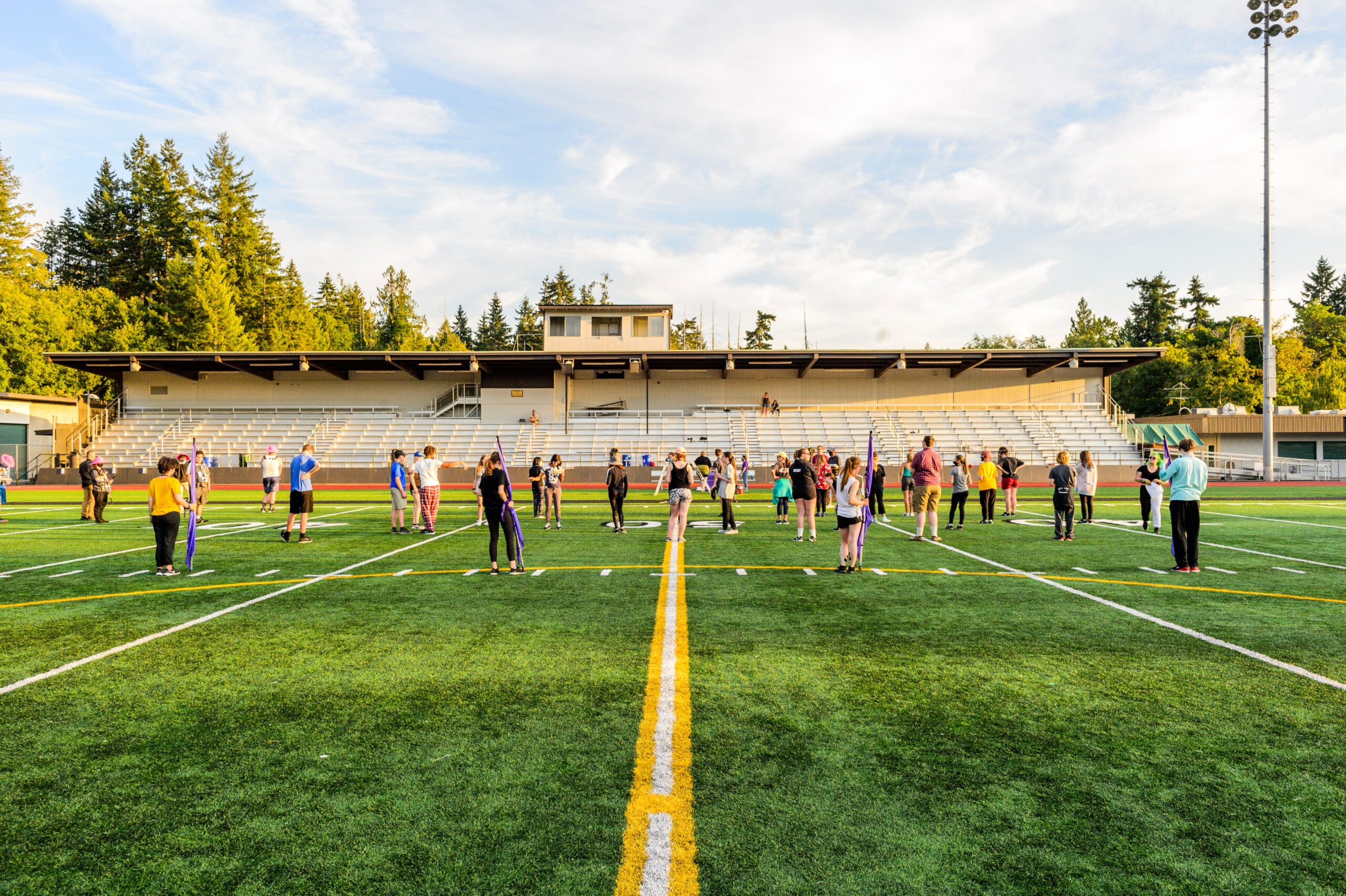
Former band kids remember strange things.
We may forget the exact score from a football game, the name of a piece we played sophomore year, or who sold the most restaurant discount cards for fundraisers. But we remember the feel of the band room before rehearsal. We remember the sound of a drumline warming up down the hall. We remember the way Friday night lights made everything feel louder than it probably was.
We remember the tiny details because band was made of tiny details. The performances, the contests, the uniforms, and the long rehearsals where “one more time” almost never meant one more time.
But for a lot of former band kids, what stays is not only the music. It is the whole strange little world around it.
The Band Room Had Its Own Weather
Every band room had a personality.
Some were bright and echoey. Some smelled like valve oil, old carpet, brass spit (you know they always swore it was condensation), and whatever someone left in a locker all season. Some had trophies everywhere. Some had instrument cases stacked in places that made no sense but somehow never fell over.
There was always noise.
Scales. Tuning notes. Someone testing a reed. Someone playing the first three notes of a song everyone was sick of hearing. Percussionists tapping on anything that would hold still. A brass player trying to hit a note they had no business attempting before warmup.
And somehow, in the middle of all that, the room could still feel like a place to land.
For a lot of students, the band room was where the school day finally shifted into something familiar. You knew where to put your bag. You knew which chair was yours, or at least which chair you were willing to defend. You knew who would be late, who would have an extra pencil, and who would claim they had practiced when absolutely no one believed them.
As a writer, I love how a band room can feel completely new and instantly familiar at the same time. In Into the Golden Lights, Wesley arrives at Harlowe County High, his fourth school, and notices that once rehearsal begins, “the room snapped back into its familiar shape” — chairs, stands, sections settling in, and the work beginning again.
The Sounds Come Back First
Former band kids may not remember every measure, but certain sounds come back fast.
The click of a metronome. The snap of a music folder opening. The first tuning note. The director’s voice from the front of the room. The low rumble of tubas before rehearsal officially started. The way the whole room changed when everyone finally played the same chord together.
You do not just hear the sound. You sit in the middle of it. You feel the trumpets behind you, the clarinets beside you, the percussion under everything, and the low brass somewhere making the floor feel more serious than it needs to.
That is one reason school music stays with people. It is not a soundtrack playing in the background. It is something you helped make, even if your part was only eight notes repeated at exactly the wrong time.
The Uniform Was Part Pride, Part Problem
Nobody forgets the uniform.
Maybe yours had a plume that refused to behave. Maybe the pants were too long, too short, or designed for a completely different human. Maybe the jacket was too hot by the second quarter and somehow still not warm enough by the fourth.
Uniforms had their own rules.
Do not lose your gloves. Do not sit on the plume. Do not forget your black socks. Do not ask where the extra gauntlets are unless you are prepared for someone to panic. Do not be the person who leaves part of the uniform on the bus.
And yet, once everyone was dressed, something changed.
The same students who had been joking, complaining, eating snacks, and trying to remember where they left their flip folder suddenly looked like a band. Not perfect. Not always serious. But connected in a way that was easier to see.
Bus Rides Became Their Own Stories
Band bus rides had rules no one wrote down.
Certain seats belonged to certain people. Certain sections claimed certain areas. Someone always brought too much food. Someone always forgot something important. Someone always fell asleep in a position that looked medically concerning.
The bus ride could be louder than the game.
There were inside jokes, card games, bad singing, nervous quiet, last-minute section drama, and at least one person trying to finish homework under the worst possible lighting. On the way to a performance, the bus felt like a holding pattern. On the way home, it felt like a confession booth, a comedy club, and a nap room all at once.
Former band kids remember those rides because so much happened between places.
Friendships formed there. Crushes became obvious there. Arguments cooled down there. People who barely talked during the school day somehow became funnier after an away game and a bag of gas station snacks.
Friday Nights Had Their Own Rhythm
Football games were not only football games for band kids.
They were call time, uniforms, loading, stands music, halftime, third quarter snacks, and trying to play with cold fingers by the end of the night. They were the director turning around with that look that meant everyone had better be ready. They were the first note of the fight song and the weird pride of hearing the band cut through the noise of the stadium.
The stands had their own rhythm.
You knew when to play. You knew when not to play. You knew which tunes the crowd liked and which ones were mostly for the band’s own entertainment. You knew that someone would miss an entrance because they were talking, eating, or trying to figure out what just happened on the field.
And then halftime came.
For about eight minutes, the band stopped being background sound and became the thing everyone was watching. The moment you stepped onto the grass. The moment you stepped off that first move.
Former band kids remember that feeling. The lights. The grass. The count-off. The sudden knowledge that the next few minutes mattered.
For a young-at-heart band kid who dreams of writing fiction, a Friday night performance is almost too good to ignore. In Into the Rising Storm, Wesley’s first away game with Jameson High’s Sentinel Sound has everything a scene needs: buses, uniforms, stadium lights, nerves, cadence, crowd noise, and the sudden feeling that he is part of something larger than himself. After the halftime show, standing shoulder-to-shoulder with his friends, Wesley realizes what he has been searching for: “Under the Friday night lights, dressed in navy and silver, I finally belonged.”
Rehearsal Was Where the Real Story Happened
Performances are easy to remember because they are big.
Rehearsals are harder to explain, but they may matter more.
Rehearsal was where people got tired, frustrated, better, worse, sunburned, humbled, and occasionally yelled at for talking after the cutoff. It was where the show slowly became less impossible. It was where one measure could take twenty minutes, one set could ruin the afternoon, and one good run could make everyone stand a little taller.
That is where band taught patience, whether we wanted it or not.
You learned that improvement was not always dramatic. Sometimes it was just being slightly less lost than yesterday. Sometimes it was finally hitting the entrance. Sometimes it was realizing the person beside you was struggling too, and helping them before anyone made a big deal out of it.
Former band kids remember rehearsal because that was where the group became real.
The applause was nice and the yearbook photos were fun. But the real work happened during the ordinary, sweaty, reps of making the show better.
The Jokes Were Half the Point
Band kids can turn almost anything into an inside joke.
A missed note. A director’s favorite phrase. A weird bus stop. A stand tune. A prop malfunction. A sectional that went off the rails. A freshman mistake that becomes legend by October.
The jokes mattered because band could be intense.
There was pressure to play well, march well, remember everything, and not be the reason the form looked like it had given up. Humor gave everyone a way to breathe. It made the long days easier. It made embarrassment survivable.
Former band kids often remember the jokes long after the schedule fades. Every section had a story that started with “that one time at band camp” and made absolutely no sense to anyone outside the group. That one thing the trombones did. That one time the drum major almost lost it. That one rehearsal where everyone was too tired to function and somehow played better than usual. That one phrase the whole section repeated until no one outside the group could stand it anymore.
You had to be there.
And for former band kids, that is exactly the point. We were.
The People Stay With You
Band memories are rarely just about band.
They are about the people who stood beside you.
The friend who saved you a seat. The section leader who scared you at first and then helped you survive. The freshman who got adopted by the older kids. The director who noticed more than they said. The person who made you laugh when you were trying not to cry. The group that made school feel a little less enormous.
Band gave ordinary students a shared purpose. It put nervous freshmen beside tired seniors. It made quiet kids audible and loud kids useful. It gave everyone a part, then asked them to listen to each other long enough to become one sound.
That does not mean every day was wonderful. Band could be stressful, messy, political, exhausting, and weird. Sometimes all before lunch.
Why These Memories Belong in Fiction
This is why I write music-centered fiction.
The band world is already full of story. It has pressure, humor, friendship, mistakes, rivalries, performances, bus rides, section politics, and the awkward courage of students trying to figure themselves out in public.
That is especially true in Me & the Marching Bands.
Wesley Wade moves through four different high schools and four different band programs in the early 1990s. Each new place has its own sound, its own rules, and its own version of what it means to belong. For Wesley, band is not only an activity. It is the first place he has to walk into after everything else changes.
That is one reason band geek fiction works.
You do not have to know how to roll-step to understand what it feels like to be new. You do not have to play trumpet to understand wanting to be heard. You do not have to remember your show music to understand the comfort of finding a place where people expect you to show up.
Still, if you do remember your show music, this kind of story may hit a little differently.
The Things That Stick Around
Former band kids remember the big things, yes.
The contests. The games. The concerts. The senior nights. The last performance.
But we also remember the smaller things: the folder with our name on it, the director’s handwriting on the board, the smell of rain on the practice field, the panic of missing a pencil, the sound of the band room before anyone called for quiet.
We remember because those things were part of growing up.
Band gave us a place to be nervous, loud, and occasionally useful. It gave us people to stand beside. It gave us music to carry long after the season ended.
And sometimes, years later, one tiny detail brings it all back.
A drum cadence in the distance. A school fight song. A row of music stands. The smell of valve oil. A football field under the lights.
Suddenly, you are there again.
The memory may not be perfect, but enough of it stays: for a while, you were part of something that made a lot of noise and somehow helped you hear yourself better.
R.K. Slade