What Is Me & the Marching Bands?
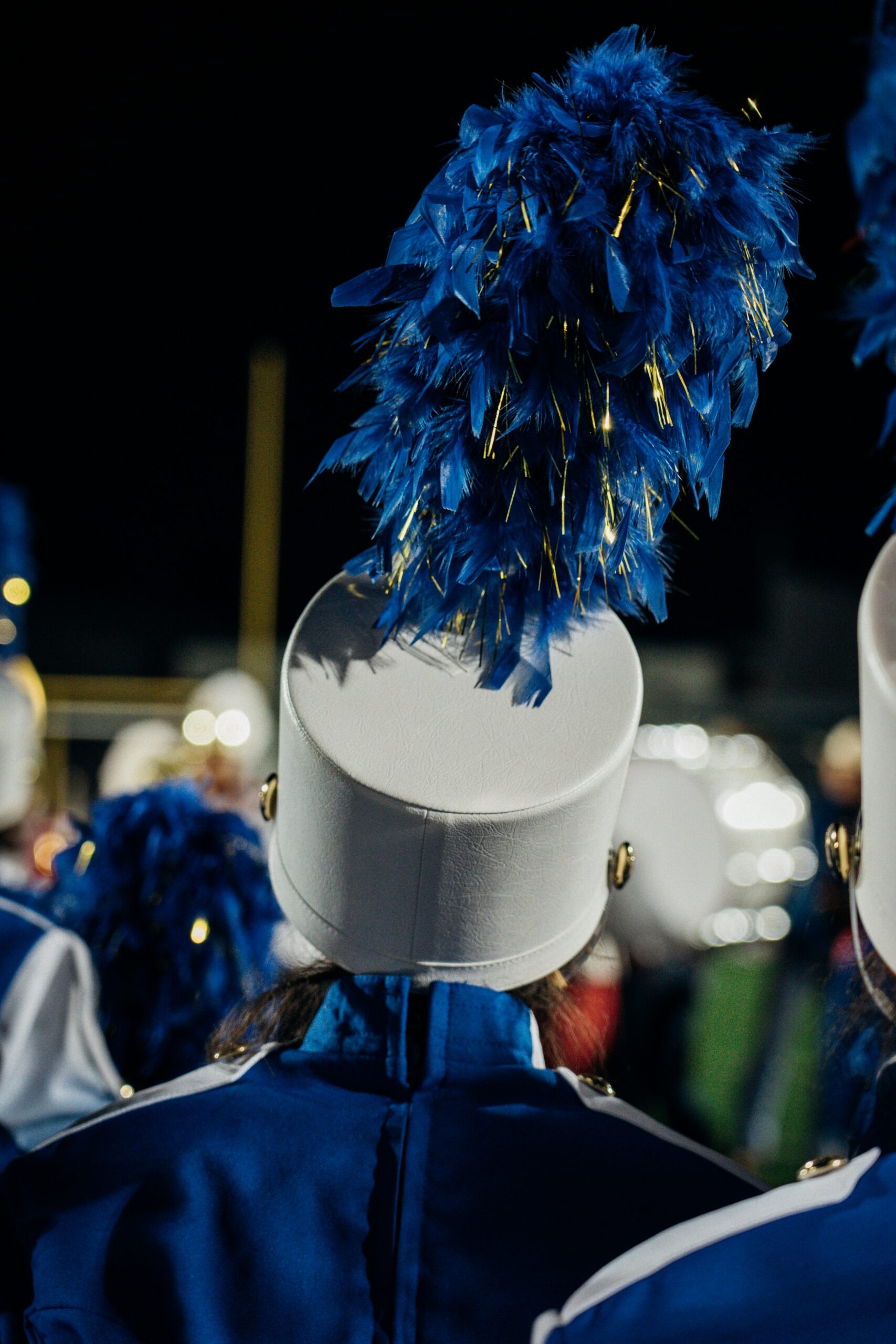
Me & the Marching Bands is a young adult marching band fiction series about music, friendship, family, growing up, and finding your place one school year at a time.
At the center of the series is Wesley Wade, a creative, quiet, shy trumpet player who is already very skilled when the story begins. He has confidence, but he is also learning that talent is not the same thing as having everything figured out.
That is part of what makes Wesley interesting to me.
He is not starting from zero. He can play. He knows music. He has ability.
But every move, every new school, every new band room, and every new group of people teaches him something he did not know yet. About music. About friendship. About family. About himself.
The series follows Wesley through four different high school marching band seasons in the early 1990s. Each book places him in a new school, a new band, and a new emotional challenge. That structure is not accidental. Wesley’s moves are centered around his family, especially his dad’s job being very transitional during those high school years.
That part comes from real life.
During my own high school years, my family moved a good bit, and I attended four different high schools. I know what it feels like to keep starting over. I know what it feels like to walk into a new building, a new band room, a new set of traditions, a new director, a new section, and a new social map where everyone else already seems to know where they belong.
That experience shaped me.
It also shaped this series.
A New Band Every Year
One of the promises of Me & the Marching Bands is that each book gives readers a new band world to step into.
- A new school.
- A new rehearsal field.
- A new director.
- A new sound.
- A new set of friendships, tensions, traditions, jokes, and expectations.
That is one of the things I love most about high school band as a story setting. Every band has its own culture. Two bands can both be marching bands and still feel completely different from each other. One might be intense and precise. Another might be loose and soulful. Another might be loud, swaggering, chaotic, and full of personality. Another might be smaller, older, warmer, and quietly meaningful.
For Wesley, every new band changes him.
And for readers, each book has its own musical and emotional identity.
Book 1: Into the Rising Storm
Into the Rising Storm begins the series with Wesley stepping into an elite Virginia band where excellence is expected, discipline matters, and the learning curve is steep. It is a new-kid survival story set inside a demanding high school marching band world.
Wesley has to learn endurance. He has to learn how to be part of something bigger than himself. He has to figure out what it means to belong when everyone else already seems to know the rules.
This is the book where Wesley begins to understand the first shape of belonging.
Book 2: Into the Silent Song
Into the Silent Song moves Wesley into a very different musical world. Voyager High’s Band of Gold is louder, looser, and full of soul. Solos are made up on the spot. Energy matters. Feel matters. For a trumpet player who is used to following the chart, that kind of freedom is both exciting and terrifying.
This is a Florida story about jazz, looseness, first love, friendship, and learning to trust your own voice.
It asks a different question than Book 1.
Not just, “Can Wesley survive this new place?”
But, “Can Wesley let himself be heard?”
Book 3: Into the Broken Beat
Into the Broken Beat takes Wesley to Alabama and into another new band culture. This book carries more disruption. More distance. More swagger. More emotional turbulence. It is about what happens when life knocks you off rhythm and you have to figure out how to find the groove again.
By this point, Wesley has already learned a lot, but that does not mean the next move is easy.
Sometimes the beat breaks.
Book 4: Into the Golden Lights
Into the Golden Lights brings Wesley into his senior year in Georgia. This is a story about leadership, mentorship, writing music, and gathering everything he has learned across the previous books into one final season.
It is not only about playing the music anymore.
It is about understanding what music can become in his hands.
It is about Wesley stepping forward, not as the same kid who first walked into the band room in Book 1, but as someone shaped by every rehearsal field, every friendship, every failure, every performance, and every place he had to start over.
Why Marching Band?
There are plenty of young adult stories set in high school.
There are plenty of sports stories, fantasy stories, dystopian stories, romances, mysteries, and coming-of-age novels.
But there are not nearly as many novels set specifically in the world of band.
That still surprises me a little, because band has almost everything a storyteller could want.
It has pressure. Humor. Competition. Friendship. Performance. Exhaustion. Leadership. Insecurity. Tradition. Rivalries. Inside jokes. Bus rides. Uniforms. Rehearsal fields. Friday night lights. Directors with coffee cups and impossible expectations. Students trying to figure out who they are while also trying to hit their dot, play in tune, and not pass out in the heat.
- Band is funny.
- Band is emotional.
- Band is deeply specific.
And somehow, band is also universal. You do not have to be a former trumpet player to understand Wesley. You do not have to know what a mellophone is. You do not have to have marched eight-to-five across a practice field in August. The band world may be specific, but the feelings are familiar. Wanting to survive the awkward, wonderful, painful, hilarious process of growing up.
Why the 1990s?
The early 1990s are a major part of the series.
For readers who remember that time, the books carry a lot of nostalgia: cassette tapes, Friday night football, pre-smartphone adolescence, school-year rhythms, mixtapes, mall culture, bus rides, and the feeling of growing up before everything was instantly connected.
For younger readers, the setting offers a window into a world that feels familiar and strange at the same time.
The emotions are still recognizable. The friendships still make sense. The pressure still feels real. The music still matters. But the texture is different.
No texting the new friend after school. No social media post to process every feeling. No instant access to every song or answer or person. The characters have to sit in silence sometimes. They have to wait. They have to wonder. They have to make mixtapes and pass notes and talk in person and survive the long ride home with whatever just happened still ringing in their heads.
That world shaped me.
It also gives the series a lot of its sound.
Who Are These Books For?
Me & the Marching Bands is for band kids.
It is for former band kids.
It is for band parents, music teachers, directors, music lovers, and readers who know the band room was never just a room.
It is also for readers who may have never marched a step but love heartfelt coming-of-age stories about friendship, family, identity, first love, leadership, and the messy work of becoming yourself.
I often describe my work as band geek fiction, but I mean that affectionately.
Band geeks are my people.
And I think there are a lot of readers, musicians and non-musicians alike, who understand what it means to find yourself in a place that looks ordinary from the outside but feels life-changing once you are inside it.
That is what Me & the Marching Bands is really about. Music is how Wesley survives. It is how he connects. It is how he figures out, one school year at a time, what kind of person he is turning into.
Start with Book 1, Into the Rising Storm, or visit the Books page for the full series.
R.K. Slade